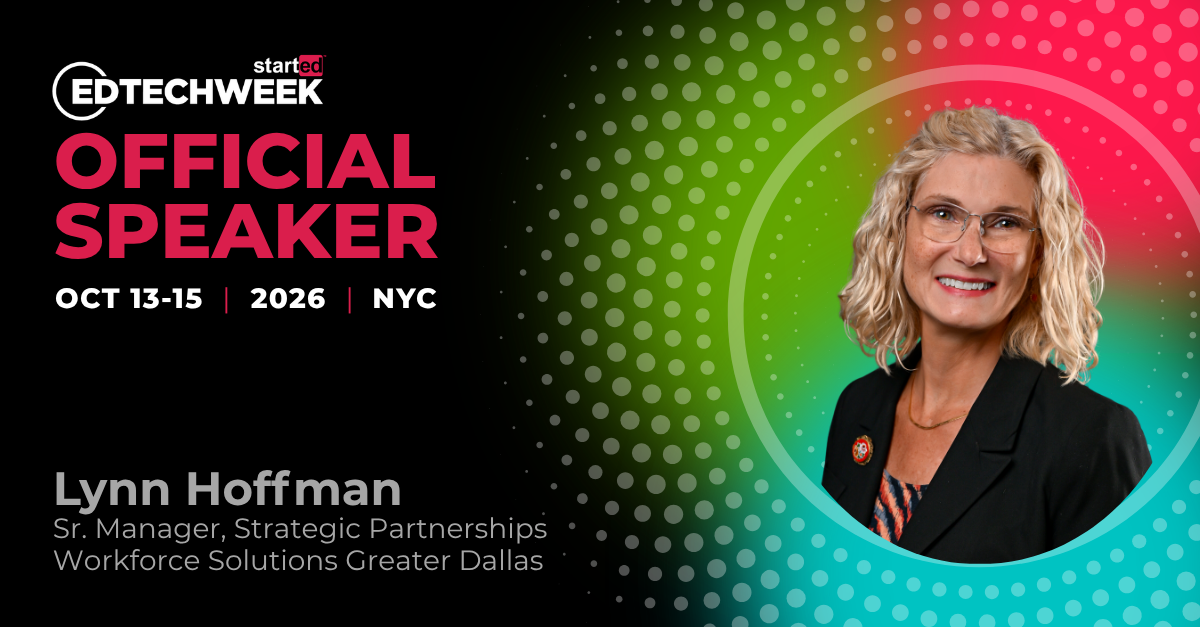
Authored By: Lynn Hoffman, Sr. Manager, Strategic Partnerships
Workforce development has traditionally been very good at responding.
An employer needs talent. A worker needs training. A college develops a program. A new technology enters the market. Funding becomes available. Workforce organizations figure out how to connect the pieces.
As Workforce Solutions Greater Dallas prepares to participate in two different conversations at EdTech Week 2026—one focused on modern apprenticeship and another on Workforce Pell—we see a larger opportunity: workforce development cannot simply be downstream of decisions about education, technology, funding and talent. Workforce organizations should help design those systems from the beginning.
Start with the learner and employer—not the system
Our workforce and education ecosystems have many entry points. A young person may begin in K–12 career and technical education. An adult may enter through a workforce center, community college, adult education program or community organization. An incumbent worker may need new skills as technology changes the workplace.
Employers do not particularly care which funding stream or institution owns each piece. Learners should not have to become experts in our systems to navigate them.
Yet programs are often designed around institutional boundaries and then people are asked to move between them.
What changes if we design around their journey instead?
Modern apprenticeship: partnership by design
Modern apprenticeship provides one useful lens.
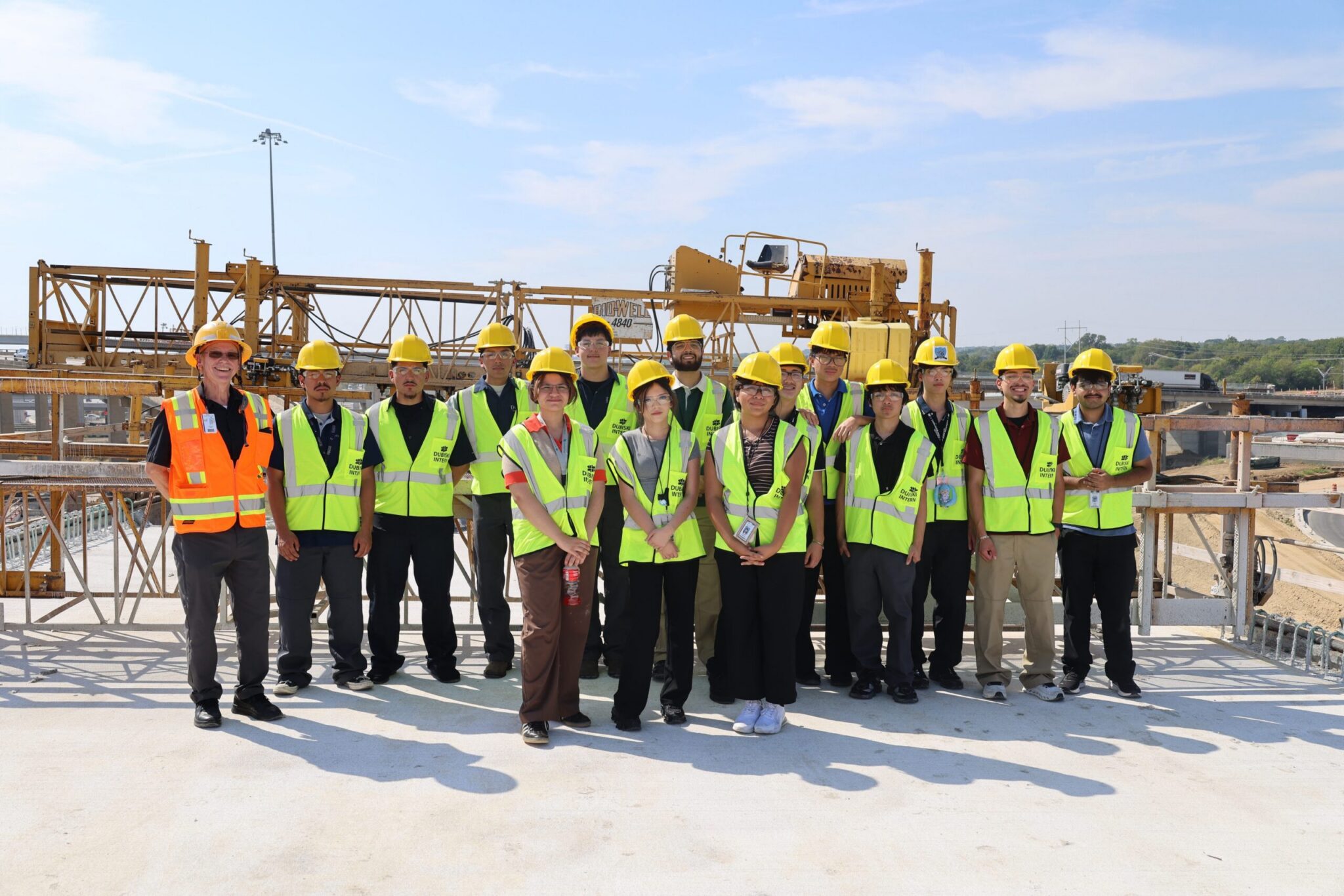
WFSDallas’ experience supporting a Data Analytics and AI apprenticeship has reinforced that apprenticeship does not have to be confined to a single employer or a traditional occupation. Employers across different industries can participate through a shared model when partners bring complementary capabilities to the table.
One lesson stands out: No single organization owns apprenticeship.
Employers understand the work and the talent they need. Education and training partners bring learning expertise. Workforce organizations connect employers, workers, funding and community resources. Intermediaries and technology partners can help absorb complexity and make programs easier to navigate.
At EdTech Week, our Modern Apprenticeship conversation will explore how those partners can work together more effectively—and how technology can help move successful models from promising pilots to scalable talent strategies.
Workforce Pell: an opportunity to co-design pathways
Workforce Pell creates another opportunity to connect qualifying short-term education and training more intentionally to high-skill, high-wage and in-demand employment.
The larger opportunity is not simply creating more short-term programs. It is creating the right programs.
That requires labor-market information, employer validation, education and training capacity, an understanding of regional talent needs and clear pathways from learning to employment. Those capabilities rarely sit within one organization.
Higher education, workforce boards and employers therefore have an opportunity to work not simply as referral partners, but as co-designers of pathways.
That is the workforce-board perspective WFSDallas will bring to the Workforce Pell conversation at EdTech Week.
Technology should remove friction
Technology has an important role in this ecosystem, but adding another platform to an already fragmented system is not the goal.
Technology should reduce duplicate work, make progress visible, simplify reporting and make participation easier for employers and learners.
That is also why workforce voices belong in education technology conversations early. Practitioners should be part of conversations with the people building, funding and investing in solutions—not simply encounter those products after they have been developed.
If technology is going to serve the workforce ecosystem, workforce should help shape it.
Workforce boards as the convener of conveners
Workforce boards occupy a unique position. They do not need to own every program, but they do need to understand how the pieces connect.
That means bringing employers, education, economic development, community organizations, technology providers and funders together around regional talent challenges.
WFSDallas increasingly sees this as a “convener of conveners” role: creating the conditions for partners to solve problems together while keeping the learner and employer at the center.
Funding and outcomes should connect, too
Public workforce and education funding remain essential, but innovation does not always fit neatly within individual funding streams. Employers, philanthropy and private capital can sometimes help address gaps related to pilots, retention supports, technology, capacity-building and scaling.
At the same time, workforce organizations, education institutions, employers and funders frequently serve the same people while measuring success differently.
Technology can help connect data, but first partners need greater alignment around what success looks like.
The next workforce system will be built together
The future of workforce development will not be defined by one new program, funding stream or technology platform. It will be defined by how effectively the ecosystem works together.
Modern apprenticeship provides one framework. Workforce Pell creates another opportunity to connect education more intentionally to economic demand. Technology can remove friction. Employers can define demand and invest in talent. Funders can help test and scale innovation. Education can create multiple entry points. Workforce boards can connect the pieces.
As we head to EdTech Week, the question we want to carry into both conversations is simple:
If we are all serving the same learner, employer and economy, what would we do differently if we designed around their journey instead of our individual systems?
For WFSDallas, that is a conversation worth having—and a challenge worth helping to solve.
Read Related Posts
Browse by Category